


Retro Gaming: Why Classic Games Are Making a Comeback
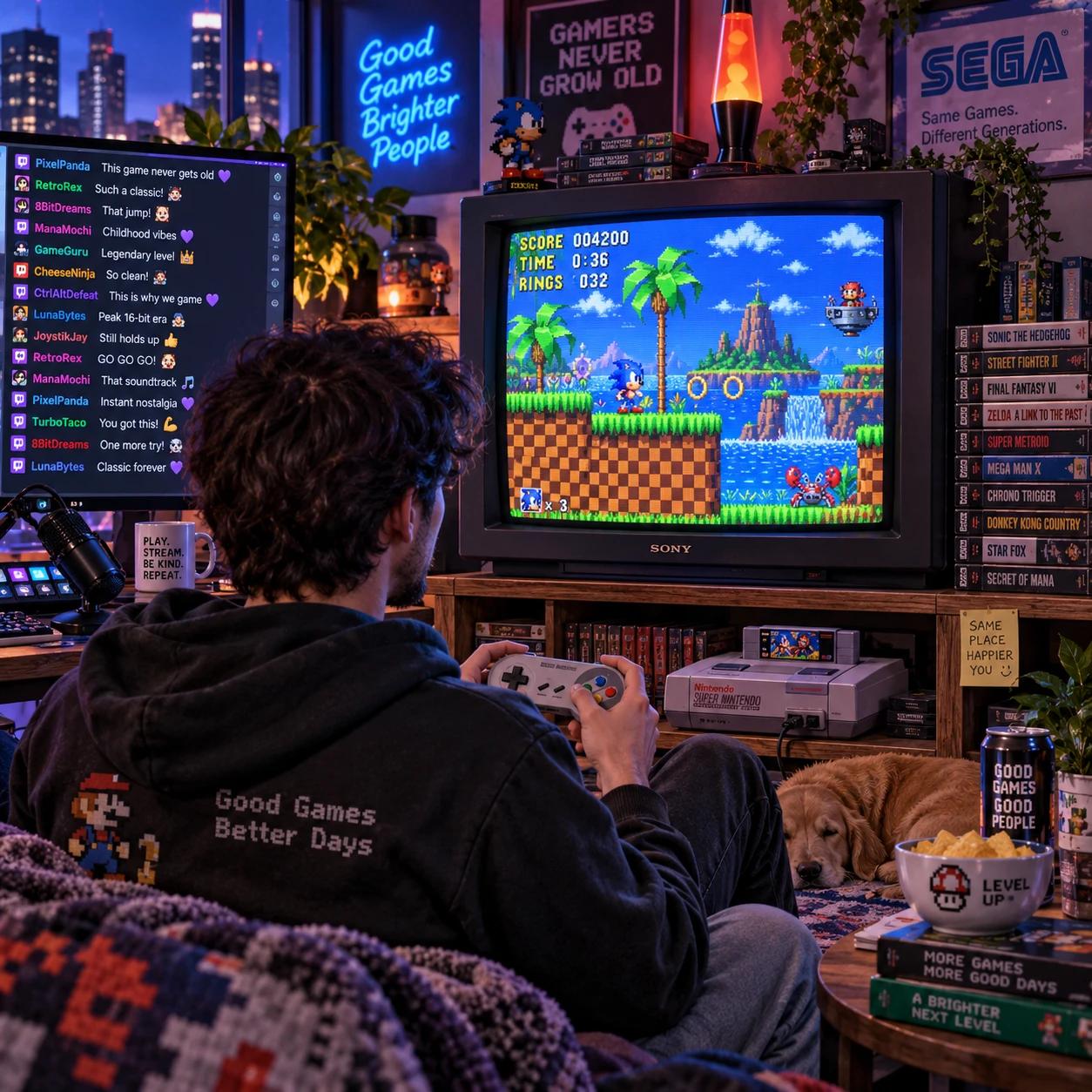
Classic video games are finding new audiences across consoles, digital libraries, streaming channels, and online communities. Their return has several causes: nostalgia brings longtime players back, focused design makes many older games easy to pick up, and modern ways to play remove some of the friction that once came with finding aging hardware.
Retro gaming is also a shared experience. A pixel-art adventure can inspire a speedrun, a lively stream chat, or a conversation between players who first encountered the game decades apart. The appeal reaches beyond remembering the past; it includes discovering how these games work and why their ideas still resonate.
What Counts as Retro Gaming?
Retro gaming means playing or collecting older video games, usually through their original releases or later versions. The label has no fixed cutoff, so it can include classic arcade titles, early console games, and older PC releases depending on the player and context.
It helps to distinguish three versions. An original release is the game as published for its first platform, played on original hardware or through a faithful reproduction. A re-release makes an existing game available again, often with minimal changes. A remaster updates presentation or performance while preserving much of the original game. These categories can overlap, and publishers do not always use the terms consistently.
That distinction matters because the experience can change. A remaster may add sharper graphics, improved controls, or quality-of-life features, while an original version may retain its exact timing, visual limits, and quirks. Neither is automatically the better choice: it depends on whether you want historical fidelity, convenience, or a more comfortable way to revisit a classic.
Nostalgia Meets Timeless Game Design
Retro games attract players through both nostalgia and strong design. Familiar music, characters, and pixel art can bring back personal memories, while clear goals and responsive mechanics make many classic games satisfying even for first-time players.
Nostalgia is a powerful invitation, but it does not explain the whole comeback. A well-designed older game often communicates its rules quickly: jump over a hazard, learn an enemy’s pattern, or find a route through a compact level. With fewer tutorials and systems to manage, players can focus on timing, exploration, and mastery.
Pixel art also holds up for reasons beyond its vintage look. Its limited resolution encourages artists to make every shape and animation count. A small sprite can be expressive, and a strong color palette can make a world readable at a glance. Today’s indie developers use similar techniques, so classic visuals feel connected to current game design rather than sealed in the past.
Older games can be demanding, though. Limited saves, abrupt difficulty spikes, and dated controls may frustrate players accustomed to modern conveniences. Trying a re-release with optional save states or updated controls can help, but those features may alter the original challenge. The best starting point is often a game whose basic idea still sounds fun, not simply the one you remember most fondly.
How Modern Platforms Make Old Games Accessible
Modern platforms make classic games easier to find and play through retro consoles, digital collections, re-releases, and emulation. Each route offers a different balance of convenience, authenticity, cost, and availability.
Retro consoles range from original hardware to modern devices designed to play older titles. Original systems can preserve the feel of a period setup, but they may require aging cables, working controllers, and compatible displays. Newer devices are generally simpler to connect, though their libraries and hardware behavior vary.
Digital collections and official re-releases can offer a straightforward way to play, sometimes with features such as save points, display options, or several games in one package. Availability depends on the platform, region, and licensing arrangements; a title being old does not mean it is available everywhere or on every service.
Emulation uses software to reproduce the behavior of one system on another. It can support preservation and make games playable on modern hardware, but the legal position depends on the game, software, and source of the game files. Laws vary by country, and owning an original cartridge or disc does not automatically settle every question about copying or downloading a file. Check local rules and use legitimate sources rather than assuming all emulation is lawful or unlawful.
For a first game, compare the total effort as well as the purchase price: platform cost, controller compatibility, display setup, and whether the version includes the features you want. A convenient official collection may be a better fit than a more authentic setup that needs repairs.
Retro Games in Streaming and Online Communities
Game streaming and online communities keep retro games visible by turning play into a shared event. Gameplay videos, live chat, speedruns, and fan discussions help older titles reach viewers who may never have owned the original console.
A familiar game can work especially well on stream because viewers recognize its characters and rules. Meanwhile, a first-time player gives the audience a reason to explain hidden routes, react to surprises, or compare the game with newer releases. That mix of shared memory and fresh discovery gives classic games a strong social life.
Speedrunning adds another layer. Players learn a game’s levels, timing, and mechanics in detail, then try to complete it as quickly as possible. A run can reveal tricks or shortcuts that casual play rarely exposes. Communities often document rules and records, helping newcomers understand what counts as a valid attempt and how different categories work.
Fan communities also keep practical knowledge in circulation: which version is being played, how a game handles, where a difficult item is hidden, and what changes between releases. That information can make an unfamiliar classic less intimidating. Communities vary in tone and expertise, so beginners may find it easiest to start with a stream or forum focused on one specific game.
Collecting, Playing, or Revisiting Classics
You can enjoy retro games by collecting original copies, playing official re-releases, or using other lawful access options. The right approach depends on whether you value the original hardware, easy access, physical collecting, or simply the chance to play.
- Original games and consoles: Best for players who enjoy the period hardware and physical media. Check that discs or cartridges work, inspect condition, and account for the cost of controllers, cables, repairs, and a compatible display.
- Re-releases and digital collections: A convenient choice for playing without sourcing old equipment. Confirm which version is included, whether your chosen platform supports it, and whether the collection adds features that matter to you.
- Emulation: Useful for research, preservation, and access when used in line with applicable laws and legitimate sources. Compatibility can vary, and setting it up may take more effort than using a supported release.
If you are starting a collection, choose a purpose before you buy. A focused collection built around one console, genre, or series is easier to manage than chasing every game that catches your eye. Set a budget, research a title’s condition and version, and avoid paying a premium simply because a listing calls a game rare. Prices and availability change, so compare recent listings rather than relying on a single seller’s claim.
Physical collecting has its own appeal, but storage, maintenance, and uncertain hardware lifespan are real trade-offs. Digital access is simpler, yet it may depend on a platform or service continuing to support a release. For many players, a small mix works well: a few meaningful physical favorites, plus digital versions for everyday play.
What Retro Gaming’s Comeback Means for the Future
Retro gaming’s comeback shows that older design ideas remain useful to contemporary games. Developers continue to draw on classic mechanics, pixel art, concise level design, and memorable sound while adapting them for new audiences and platforms.
Modern games often borrow the clarity of an arcade challenge or the exploration of a 2D adventure, then add features that earlier hardware could not support. Some indie games deliberately echo older styles; others use retro influence more subtly through their pacing, visual readability, or focus on a small number of well-developed mechanics.
Re-releases and emulation also raise questions about preservation. Games can become difficult to access when hardware breaks, media deteriorates, or rights are unclear. No single platform solves that problem, and commercial releases may omit titles or versions. Still, the continued interest in classic games gives publishers, archivists, players, and communities a reason to document and maintain gaming history.
The future of retro gaming will likely keep moving between preservation and reinvention. Some players will seek the original experience; others will prefer a remaster or a new game inspired by it. Both paths keep classic ideas in circulation.
Frequently Asked Questions
What makes a game “retro”?
A game is usually called retro when it comes from an earlier era of video game history, but there is no universal age cutoff. The term depends on context: one player may mean arcade and 8-bit classics, while another includes games from later console generations.
Is emulation the same as owning an original game?
No. Emulation is software that reproduces a game system’s behavior, while an original game is the physical or licensed release for that system. The legal status of game files and copying varies by location and circumstance, so use legitimate sources and check the rules where you live.
Why are retro games popular with younger players?
Younger players may discover classic games through streams, speedruns, friends, re-releases, or modern games influenced by older design. Simple controls, distinctive pixel art, and short, focused challenges can make a decades-old game approachable without any personal nostalgia.
Where can players find classic games today?
Look for official digital collections, publisher re-releases, compatible retro consoles, and reputable sellers of original hardware and games. Availability varies by title and platform, so check the included version and confirm that it works with your system before buying.