
The Psychology Behind Gaming Addiction and How to Avoid It

Gaming can be an enjoyable hobby, a creative outlet, and a way to stay connected with friends. The concern begins when play becomes difficult to control and starts displacing sleep, responsibilities, relationships, or physical activity. Understanding the psychology behind gaming addiction makes it easier to respond without shame and choose realistic changes.
Gaming Addiction vs. Healthy Enthusiasm
Gaming addiction involves persistent loss of control and meaningful impairment or distress, while healthy enthusiasm remains compatible with everyday responsibilities. Playing frequently does not automatically mean someone has a disorder or a serious problem.
A dedicated player may spend a long weekend completing a campaign, joining a tournament, or playing with an online community. They can still stop when necessary, maintain sleep and commitments, and return to other interests. In problematic gaming, the pattern continues despite clear consequences or repeated attempts to reduce it.
The term Internet Gaming Disorder appears in clinical discussions and diagnostic frameworks, but it is not a label for every enthusiastic gamer. Assessment considers the duration, severity, loss of control, and impact on a person’s life. A useful self-check is to compare intended playtime with actual playtime, then ask:
- Can I stop or take a planned break when I decide to?
- Has gaming repeatedly disrupted sleep, work, study, health, or relationships?
- Do I continue mainly to avoid difficult feelings rather than because I want to enjoy the activity?
- Have attempts to cut back failed several times?
One difficult week is different from a sustained pattern. Context matters.
Why Games Can Become So Compelling
Games become compelling by combining clear goals, feedback, progression, uncertainty, competition, and social engagement. These design features are not inherently harmful; they make interactive entertainment satisfying and give players a sense of direction.
Most games create a reward loop: a player takes an action, receives feedback, makes progress, and sees a new goal. Experience points, unlocked abilities, ranked results, achievements, collectibles, and story developments all provide visible evidence of improvement. The next objective is often close enough to feel achievable, which encourages another round.
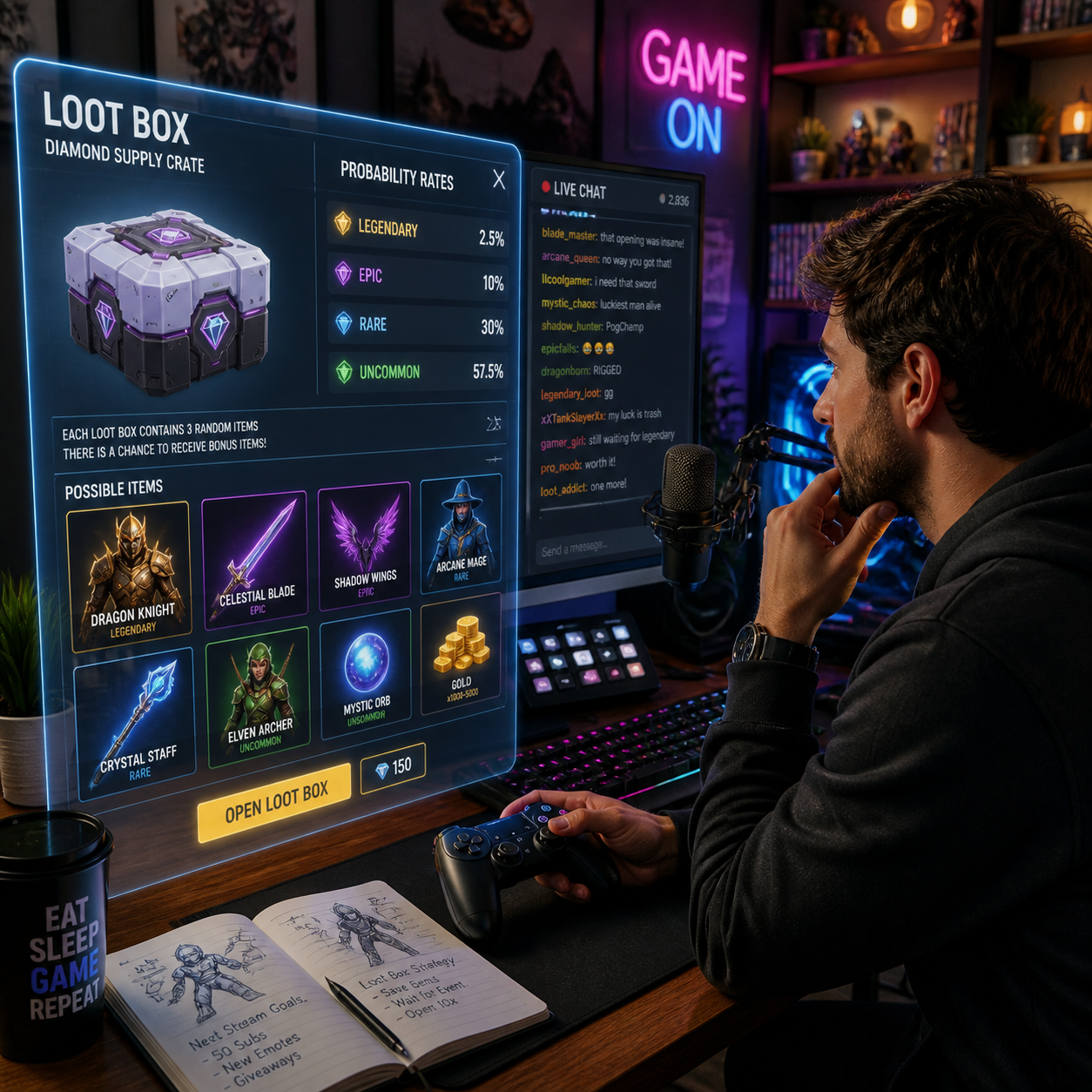
Uncertainty adds another layer. Random rewards, changing opponents, rare items, and unpredictable match outcomes can keep attention focused. The brain’s reward system responds to anticipation and meaningful feedback, not simply to winning. Dopamine is involved in motivation, learning, and reinforcement, but it is not a complete explanation for gaming behavior. Saying that a game is addictive because it releases dopamine oversimplifies a much larger interaction between design, personality, mood, habits, and circumstances.
Social features can be equally powerful. Guilds, voice chat, team roles, livestream chats, and online communities offer friendship, belonging, and shared achievement. Leaving may feel like letting teammates down or missing an important social moment. Competitive systems can also make stopping feel like abandoning progress.
The trade-off is clear: a strong progression system can help players learn and stay engaged, but it can also make stopping harder when sessions have no natural endpoint. Scheduled pauses create those endpoints.
The Psychological Factors Behind Problematic Gaming
Problematic gaming usually develops through several interacting factors rather than one cause. Habit formation, emotional escape, stress, loneliness, low mood, achievement needs, and social belonging can all influence how gaming fits into a person’s life.
Habit formation often follows a cue-routine-reward pattern. A difficult task, notification, feeling of boredom, or familiar time of day becomes the cue. Gaming supplies immediate stimulation or relief, so the routine becomes easier to repeat. Over time, starting a game may happen almost automatically before the player consciously chooses it.
Gaming can also regulate emotion. After a stressful day, a game may provide structure, control, distraction, or a temporary sense of competence. Those benefits are real. The risk increases when gaming becomes the main way to cope with anxiety, loneliness, frustration, or low mood, especially if it prevents the person from addressing the underlying problem.
Achievement and identity matter too. A player might feel capable in a game when school, work, or relationships feel uncertain. Online communities can provide recognition and belonging that are missing offline. This does not make the community false or unimportant; it means balance becomes especially important when one environment supplies nearly all social connection.
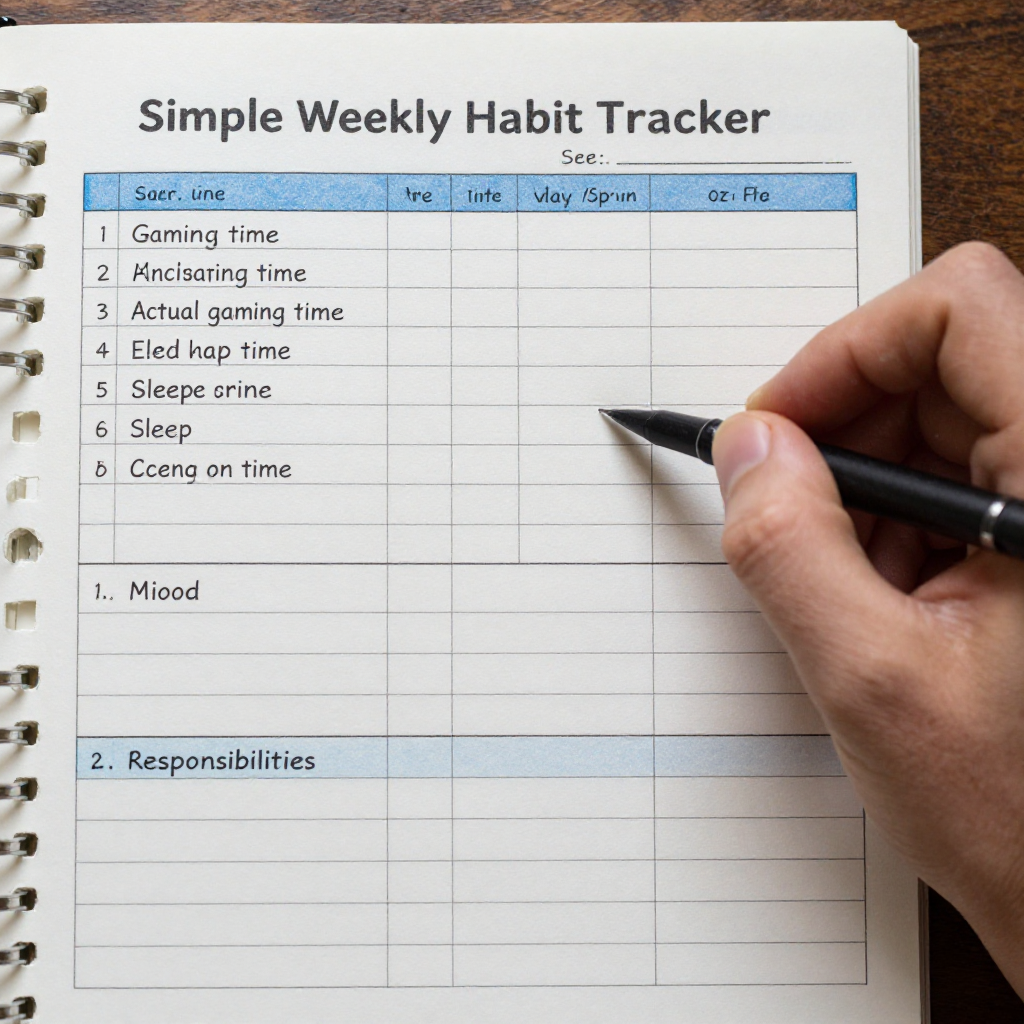
Track the pattern for one week without judgment. Record what you felt before playing, what you intended to do, how long you actually played, and how you felt afterward. This often reveals whether the main trigger is boredom, stress, social pressure, competition, or avoidance.
Warning Signs That Gaming May Be Becoming a Problem
The clearest warning signs are loss of control, persistent interference with daily life, and distress when gaming is limited. A single symptom does not establish Internet Gaming Disorder, but several signs occurring repeatedly deserve attention.
- Neglected responsibilities: missed deadlines, unfinished household tasks, skipped classes, or reduced performance at work.
- Unplanned escalation: regularly playing much longer than intended or starting sessions despite deciding not to.
- Irritability when stopping: strong frustration, restlessness, or conflict whenever a session ends.
- Sleep disruption: staying up late, waking to play, or feeling consistently tired during the day.
- Withdrawal from offline life: declining exercise, hobbies, friendships, or family time that previously mattered.
- Continuing despite consequences: recognizing harm to health, finances, study, or relationships but feeling unable to change course.
Secrecy can be another clue, particularly when someone hides hours played or gives inaccurate explanations to avoid conflict. Avoid turning these signs into a character judgment. They are information about a pattern that may need support.
How to Avoid or Reduce Gaming Addiction
To reduce problematic gaming, make play more deliberate, protect essential routines, and change gradually enough to sustain. A practical plan works better than relying on willpower at the end of an exciting session.
- Measure the baseline. For seven days, note start time, end time, game type, trigger, and mood before and after playing. Include streams and mobile gaming if they extend the same habit.
- Set a specific window. Choose sessions that fit around sleep, meals, study, work, and relationships. A defined start and finish is more useful than saying you will play less.
- Use external stopping cues. Set an alarm before playing, keep a clock visible, and stop at a natural checkpoint. If you repeatedly ignore one alarm, use a second cue such as a message to a friend or a device limit.
- Build a transition routine. Stand up, drink water, stretch for five minutes, and leave the gaming space when the session ends. Physical movement helps break the automatic loop.
- Protect device-free anchors. Keep phones and gaming devices away from bed, meals, and the first or last 30 minutes of the day. Sleep protection usually produces more benefit than an overly strict total-hours target.
- Replace the function, not only the activity. If gaming provides social connection, arrange a call or in-person activity. If it provides stress relief, try walking, music, breathing exercises, or a low-pressure hobby.
Reduce gradually when abrupt stopping causes repeated rebound sessions. Choosing shorter, planned play may preserve enjoyment while restoring control. If a particular game’s ranked mode, social pressure, or endless progression repeatedly defeats your plan, take a temporary break from that feature rather than assuming every game must be abandoned.
Creating Healthier Gaming and Streaming Habits
Healthier gaming and streaming habits combine planned screen time with movement, sleep protection, mindful viewing, and clear social boundaries. The same principles apply to players, streamers, and viewers, although streamers may face work-related pressure to stay live.
Streamers should publish a schedule that includes an end time, preparation time, meals, and recovery. A longer broadcast may increase short-term engagement, but it can reduce sleep and consistency if it becomes the default. Viewers can use a watchlist, a stopping alarm, and full-screen breaks instead of letting autoplay determine the evening.
During long sessions, stand or walk briefly every 45 to 60 minutes. Keep water nearby, adjust posture, and avoid sacrificing regular meals. Competitive play deserves an extra boundary: stop after a preset number of matches or when concentration and mood noticeably decline. Continuing while angry often turns entertainment into emotional exhaustion.
Chat can strengthen social connection, yet constant notifications create pressure to remain available. Mute nonessential alerts, leave chats during sleep hours, and decide in advance whether you will participate or simply watch. Mindful viewing means occasionally asking, Am I still enjoying this, or am I continuing because stopping feels uncomfortable?
When to Seek Additional Support
Seek additional support when gaming-related difficulties persist, cause significant harm, or remain difficult to change despite consistent self-directed efforts. Early support is a practical step, not proof of failure or a formal diagnosis.
Start with someone trustworthy who can discuss the issue without shaming you. A qualified mental-health professional can explore sleep, anxiety, depression, stress, attention difficulties, loneliness, and other factors that may be reinforcing problematic gaming. Treatment should focus on the whole pattern, not simply removing games.
Professional help is especially appropriate when gaming contributes to severe sleep loss, missed work or school, serious relationship conflict, financial problems, or thoughts of self-harm. In an immediate crisis, contact local emergency services or a crisis service in your country.
For background on how problematic gaming is discussed in international health classification, consult the World Health Organization’s information on gaming disorder. A resource can provide context, but only a qualified professional can assess an individual situation.
Frequently Asked Questions
What is the difference between gaming addiction and a gaming hobby?
A gaming hobby remains under reasonable control and fits alongside sleep, responsibilities, relationships, and other interests. Gaming addiction or problematic gaming involves persistent difficulty stopping and meaningful impairment or distress.
What are the main warning signs of problematic gaming?
Common signs include playing longer than intended, neglecting responsibilities, sleep disruption, irritability when stopping, withdrawing from offline activities, and continuing despite clear negative consequences.
How can parents or partners discuss excessive gaming constructively?
Use specific observations rather than insults: mention missed sleep, cancelled plans, or changes in mood. Ask what gaming provides, listen before proposing limits, and agree on measurable boundaries such as device-free meals or a shared bedtime routine.
Can gaming be part of a healthy routine?
Yes. Gaming can support enjoyment, creativity, skill development, and social connection when it has a deliberate place alongside sleep, movement, responsibilities, and offline relationships.
When should someone seek professional support?
Consider professional support when self-directed changes repeatedly fail or gaming causes substantial harm, distress, conflict, sleep problems, academic or work difficulties, or isolation. A mental-health professional can help identify the underlying triggers and create a suitable plan.