



Understanding Loot Boxes: Are They Fair or Predatory?
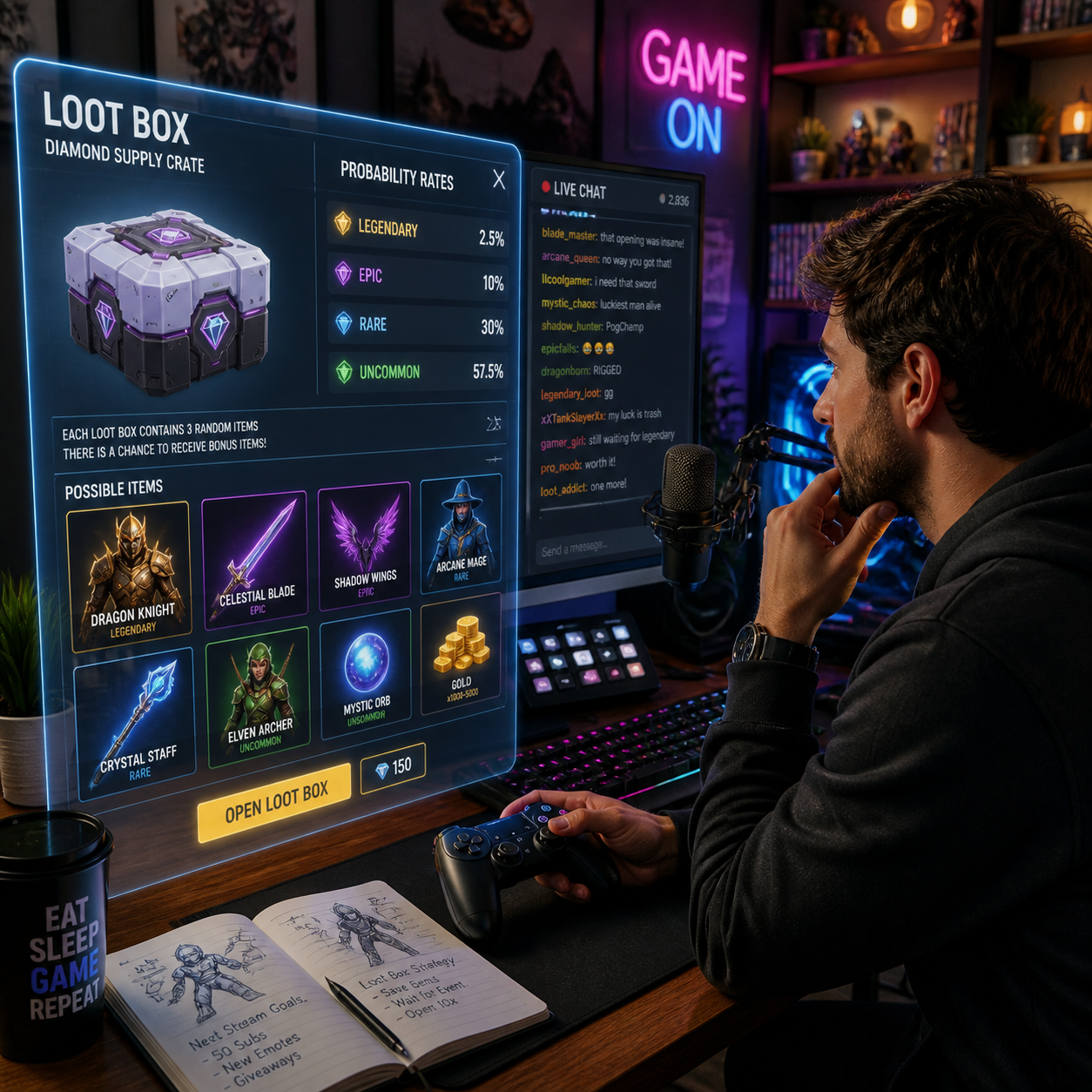
Loot boxes are digital items that provide randomized rewards, usually after a player spends in-game currency or real money. They can support ongoing game development and offer optional cosmetic items, but unclear odds, repeated spending, and competitive advantages can create serious consumer protection concerns.
The fairest way to assess a loot box is to examine five factors: transparency, player control, reward type, pricing, and psychological pressure. That framework avoids two simplistic conclusions. Not every loot box is automatically harmful, and a colorful presentation does not make every system harmless.
What Are Loot Boxes and How Do They Work?
Loot boxes are virtual containers with randomized rewards, purchased with in-game currency, real money, or both. The player pays or uses a token, opens the box, and receives one or more items selected by the game’s reward system.
A typical purchase cycle looks like this:
- The player earns or buys premium in-game currency.
- The game displays a loot box, pack, chest, capsule, or similar item.
- The player opens it without knowing the exact reward in advance.
- The system selects an item according to programmed probability and drop rates.
- The player may receive a duplicate, a lower-value reward, or a rare item.
Rewards may include character outfits, weapon appearances, emotes, profile decorations, boosts, equipment, or progression materials. Some games offer duplicate protection, compensation currency, or a pity system that improves the chance of a valuable reward after repeated attempts. Those features can reduce frustration, but they do not automatically make the overall pricing fair.
The practical question is what the player is buying. A direct purchase gives a known item at a known price. A loot box sells a chance. That distinction matters because the final cost of obtaining a desired item may be unpredictable, especially when duplicate items are common or the game provides no clear drop-rate information.
Why Do Games Use Loot Boxes?
Games use loot boxes to generate recurring revenue, deliver new content, and keep players engaged between major updates. They are particularly common in live-service games, where developers continuously maintain servers, release events, and add seasonal content.
For publishers, randomized rewards can create a flexible business model. A player might buy one box during an event, while another player may purchase several. The system also gives developers a way to distribute a large pool of cosmetic items without requiring a separate storefront transaction for every reward.
Loot boxes can serve several design goals:
- Revenue generation: Ongoing microtransactions can help fund updates and online services.
- Customization: Cosmetic items let players personalize characters, profiles, vehicles, or equipment.
- Engagement: New reward pools and seasonal events encourage players to return.
- Collection: Some players enjoy completing themed sets or discovering unusual items.
- Social participation: Rare cosmetics can become part of a game’s community identity.
These benefits come with trade-offs. A live-service game needs income, but a revenue system can damage trust if it makes ordinary play feel deliberately incomplete. When important rewards sit behind repeated random purchases, the design begins to compete with the player’s enjoyment rather than support it.
When Can Loot Boxes Be Considered Fair?
A loot box is more defensible when its odds, price, rewards, and alternatives are clear, and when purchasing remains optional rather than necessary for competition or normal progression.
A useful fairness test is the CLEAR model:
- Clarity: The game shows current probabilities, item pools, duplicate rules, and meaningful terms before purchase.
- Limits: Players can set spending controls, and the interface does not obstruct cancellation or budget awareness.
- Equal play: Rewards do not provide a significant competitive advantage over players who do not spend.
- Accessible alternatives: Players can earn comparable content through gameplay or buy desired items directly.
- Reasonable value: The price and frequency of rewards fit the game’s overall cost and audience.
Cosmetic-only loot boxes generally create fewer fairness concerns than systems that sell power. A character skin, emote, or visual effect does not normally alter a match outcome. However, cosmetic systems can still be problematic if they hide odds, use aggressive limited-time pressure, or target young players with repeated purchase prompts.
Fairness also depends on informed choice. A player should understand whether premium currency obscures the real price, whether items can be traded, and whether duplicate rewards convert into useful value. Clear information cannot remove randomness, but it lets players decide whether the risk suits their budget.
What Makes Loot Boxes Potentially Predatory?
Loot boxes become potentially predatory when they combine unclear probabilities with pressure, repeated spending, weak safeguards, or rewards that affect gameplay. The concern is strongest when players cannot easily understand the financial risk before opening the box.
Warning signs include:
- Hidden or confusing probabilities: Drop rates are missing, buried in menus, or presented without explaining the reward pool.
- Limited-time pressure: Countdown timers and exclusive events encourage impulsive decisions or fear of missing out.
- Currency obfuscation: Bundled tokens make it difficult to see the real-world price of one opening.
- Repeated purchase prompts: The game immediately offers another box after a disappointing result.
- Variable rewards tied to power: Items improve progression, performance, or access to competitive advantages.
- Weak age protections: Children can spend money without clear parental approval or effective controls.
Random reinforcement can make an occasional rare reward feel especially exciting. That does not mean every player will lose control, but it explains why repeated openings can become difficult to manage for some people. A player may spend more while trying to recover the value of earlier purchases, even though each new opening remains uncertain.
The risk is also higher when a game combines several pressure points: a low-probability reward, a short event window, an expensive currency bundle, and competitive benefits. In that situation, “optional” spending may feel practically necessary. Consumer protection discussions should focus on those design details rather than making unsupported claims that all loot boxes legally qualify as gambling. Definitions and rules vary by jurisdiction and by the features of a particular system.
Loot Boxes, Streaming, and Social Pressure
Streaming can amplify loot box spending because opening videos and livestreams turn a private purchase into public entertainment. Audience reactions, chat messages, and creator excitement may make repeated openings appear normal, although creators differ widely in how responsibly they present them.
On a stream, a lucky result produces an immediate social reward. Viewers celebrate the reveal, clip the reaction, and may ask the creator to open another box. Some creators fund openings as part of their content budget, while viewers may interpret the spectacle as evidence that the system is more generous than it really is.
Responsible streaming practices can reduce that pressure:
- Disclose sponsorships, gifted currency, affiliate arrangements, and paid promotions.
- State clearly when a purchase is made for entertainment content rather than as a recommendation.
- Show the game’s odds and the total amount spent, including failed attempts and duplicates.
- Avoid presenting rare rewards as typical outcomes.
- Use extra care when a significant part of the audience is underage.
Viewers can protect themselves by separating entertainment from advice. A streamer’s budget, sponsorship, or business model may be very different from yours. Watching someone open twenty boxes is content; it is not evidence that buying twenty boxes offers good value.
How Players Can Make Informed Decisions
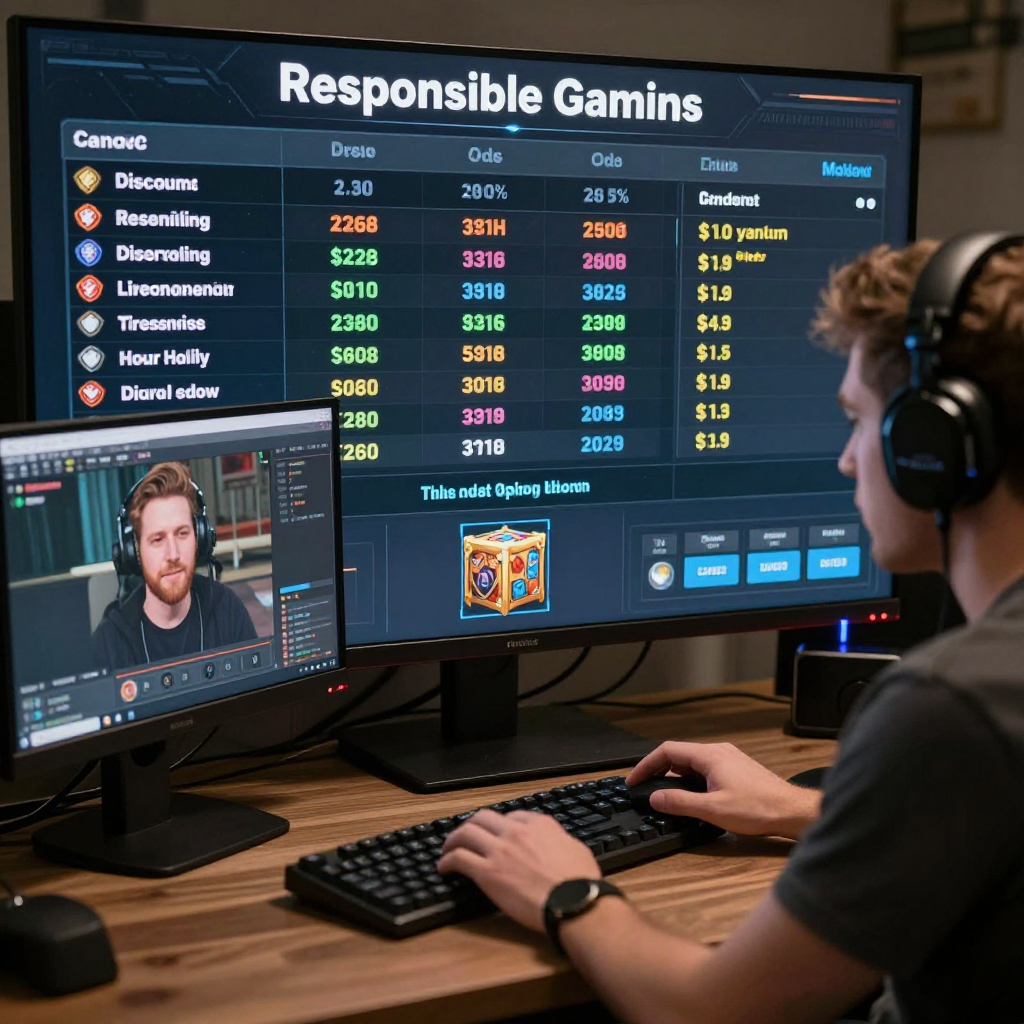
To make an informed loot box decision, check the odds and real price first, then decide whether the reward is worth an uncertain outcome before spending anything. A simple pause can prevent an impulse purchase.
Use a five-question spending check
- What exactly can I receive? Look for the full item pool, rarity categories, duplicate rules, and any guaranteed-reward system.
- What is the real-world cost? Convert premium currency into money before opening. Include unused currency left in the account.
- Does the reward affect gameplay? Cosmetic items carry a different risk from weapons, abilities, upgrades, or progression materials.
- Can I earn or buy it directly? A direct-purchase option gives you a known price and avoids duplicate risk.
- Would I still buy this without the timer? If the answer is no, the limited-time design may be driving the decision.
Set a spending limit before entering the shop, not after receiving a disappointing reward. Treat that limit as a hard boundary. Disable stored payment methods where appropriate, and avoid spending money needed for essentials.
Parents should review age ratings, account permissions, platform purchase settings, and parental controls. Restrictions can help, but adults should also explain premium currency, random rewards, and the difference between a known price and a chance-based purchase. Check transaction histories regularly, particularly on shared consoles and mobile devices.
Players who notice persistent distress, secrecy, or spending that feels difficult to control should step away from the game and seek support from a trusted person or an appropriate local service. The aim is practical control, not shame.
The Future of Loot Box Transparency
The future of loot boxes depends on clearer disclosures, stronger player controls, and responsible design that respects informed choice. Transparency should cover probabilities, total pricing, duplicate outcomes, reward guarantees, age suitability, and whether items influence competition.
Developers can build trust by making odds easy to find, showing the real-money equivalent of premium currency, offering direct-purchase alternatives, and providing meaningful ways to earn rewards through play. Streamers and platforms also have a role in labeling sponsorships and presenting spending honestly.
Players should judge each system on its details. A cosmetic loot box with visible odds, a modest price, generous free alternatives, and no competitive effect presents a different ethical question from a power-focused system that uses scarcity and repeated prompts. Neither category deserves an automatic verdict without examining how it works.
Better transparency will not eliminate every disagreement about randomized rewards. It does give players, parents, creators, and regulators the information needed to evaluate risk. In games and livestreaming culture, that knowledge is the strongest practical defense against spending that no longer feels voluntary.
Loot Box FAQ
Are loot boxes gambling?
Some loot boxes share features with gambling, such as payment and chance, but whether a particular system legally qualifies as gambling depends on its design and the laws of the relevant jurisdiction. The presence of random rewards alone does not support a universal legal conclusion.
Are cosmetic loot boxes safer than gameplay-affecting ones?
Cosmetic loot boxes usually pose less risk to competitive fairness because they do not provide power. They can still create concerns involving unclear odds, overspending, limited-time pressure, and younger players.
How can players check loot box odds?
Open the game’s item shop, loot box information panel, or terms before purchasing. Look for probability tables, rarity definitions, duplicate compensation, guaranteed rewards, and changes announced in patch notes.
Why are loot boxes controversial?
Loot boxes are controversial because they combine microtransactions with uncertain outcomes. Critics focus on hidden probabilities, compulsive spending risks, vulnerable players, and pay-to-win mechanics, while supporters point to optional cosmetics and revenue for ongoing games.
How can parents limit loot box spending?
Use platform-level parental controls, require purchase approval, remove saved payment details, review transaction records, and discuss how premium currency and randomized rewards work. Age ratings can provide guidance, but household rules and account settings are also important.